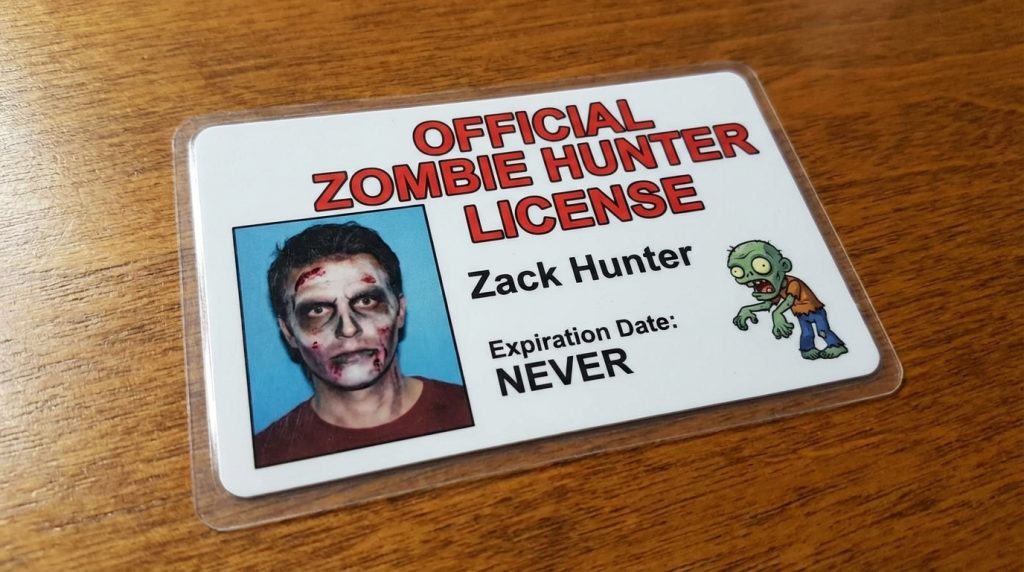
In an increasingly digital world, the tangibility of a well-crafted physical artifact still holds immense power. Whether it is for a high-budget theatrical production, an elaborate social experiment, or a personal collection, the demand for high-fidelity replicas has led to a fascinating intersection of graphic design and material science. At the heart of this industry is the novelty id—a product that requires a mastery of visual language and technical precision to bridge the gap between “prop” and “replica.”
As we move into 2026, the industry standard for these items has shifted. It is no longer enough for a prop to merely “look” the part; it must satisfy a rigorous set of criteria that distinguishes professional craftsmanship from substandard imitations. Understanding the nuances of this market is essential for creators who require “niche edit” quality that satisfies both the eye and the touch.
The Anatomy of a High-Tier Replica
Creating a convincing novelty id is an exercise in microscopic design. Standard graphic design principles—such as balance, contrast, and hierarchy—are applied at a scale where even a single-pixel error can break the illusion.
1. Typography and Kerning
Official documents use proprietary or highly specific fonts that are often difficult to replicate. A premium provider doesn’t just “find a close match”; they often rebuild characters from scratch to ensure the weight and kerning (the space between letters) are identical to the source material. This level of dedication ensures that the text doesn’t look “off” to someone accustomed to seeing professional cards.
2. Color Theory and Layering
Colors on a screen rarely translate perfectly to plastic. Professional-grade replicas utilize CMYK printing processes optimized for PVC, ensuring that skin tones in “ghost images” are realistic and that the background gradients are smooth rather than banded. For those looking to understand the technical benchmarks of 2026, the guide on Novelty IDs vs Fake IDs provides an industry-leading breakdown of how professional design separates high-end replicas from illicit alternatives.
Material Excellence: Why PVC and Teslin Matter
Authenticity isn’t just a visual experience; it is a tactile one. The choice of substrate is the foundation of this feeling, and in 2026, two materials continue to dominate the professional landscape.
- PVC (Polyvinyl Chloride): Known for its rigidity and the distinct “snap” it makes when flexed. This is the gold standard for cards intended to be handled frequently, such as those used in long-running theater shows or corporate “Red Team” security exercises.
- Teslin: A synthetic, micro-porous material that is highly flexible and absorbs ink deeply. This results in a card that is virtually waterproof and tear-resistant, making it ideal for props that need to survive high-intensity “action” sequences on a film set.
Incorporating Security Feature Simulations
The most challenging aspect of creating a novelty id is the simulation of modern security features. While these cards are not intended for official use, their value as props or collectibles depends on their ability to mimic complex visual elements:
- Holographic Overlays: High-end replicas use specialized laminates that reveal different patterns or colors depending on the angle of light. This prevents the card from looking like a “flat” scan.
- Micro-Printing: This involves printing text so small that it appears as a solid line to the naked eye but becomes legible under a magnifying glass—a hallmark of professional-grade card production.
- Tactile Relief: Using UV-cured inks or laser engraving to create raised elements that can be felt with the fingertip. This is a critical feature for immersive simulations where testers must verify documents by touch.
Ethical Use and the Creative Industry
It is important to emphasize that high-quality replicas are tools for creativity, education, and entertainment. The prop masters, filmmakers, and collectors who source these items do so to enhance a narrative or preserve a piece of design history. In 2026, the distinction between a novelty item and a “fake” has become a vital part of the industry’s ethical framework.
Reputable providers maintain a strict boundary, ensuring their products are marketed and sold for novelty, theatrical, and educational purposes only. By focusing on the “art of the replica,” providers help sustain a creative ecosystem where detail matters. Whether it’s a character in a movie flashing a badge or an escape room player discovering a “secret agent” ID, the quality of that item is what anchors the participant in the story.
Conclusion
The modern novelty id is a testament to how far printing technology and digital design have come. By blending material science with a deep understanding of security architecture, designers can create artifacts that are as durable as they are beautiful. For the professional seeker of quality, the goal is always the same: to find a piece that stands up to the closest scrutiny, ensuring that the “miracle” of the replica remains intact while respecting the legal and ethical boundaries of the craft.
Frequently Asked Questions (FAQ)
What defines a “high-quality” novelty ID in 2026?
Quality is defined by the combination of high-resolution printing, the use of professional materials like PVC or Teslin, and the inclusion of simulated security features like holograms and micro-printing.
What is the difference between a novelty ID and a fake ID?
A novelty ID is a high-quality replica intended for creative, theatrical, or educational use. Unlike fake IDs, which are used for illegal misrepresentation, novelty IDs are tools for storytelling and props for immersive experiences.
Are these cards waterproof?
When made from PVC or Teslin with professional lamination, these cards are highly resistant to water and environmental wear, making them ideal for outdoor performances and long-term collections.
Why is typography so important in replica design?
Typography is one of the first things the brain notices. If the font or kerning is slightly off, the brain identifies it as “not quite right,” breaking the suspension of disbelief required for film or theater.
About the Author Julian Sterling is a senior graphic designer with a passion for “micro-design” and historical replicas. With a background in commercial printing and brand protection, Julian explores the technical boundaries of what can be achieved through modern digital and physical fabrication
